
Signs Your Elderly or Nonverbal Loved One Is in Dental Pain
You’ve noticed something’s off. Maybe they’re eating less, pulling away when you touch their face, or just seem… different. But they can’t tell you what’s wrong, and that uncertainty is its own kind of stress.
If your loved one is elderly, has dementia, or is nonverbal for any reason, dental pain can hide in plain sight. Left untreated, it can lead to infection, malnutrition, and a steep decline in quality of life. Here’s what to watch for, and what to do next.
Why Dental Pain Goes Unnoticed in Nonverbal Loved Ones
Dental pain doesn’t disappear just because someone can’t describe it. It shows up in behavior instead of words. Caregivers often mistake these behavioral signals for “just aging” or a symptom of dementia progression, when the real cause is a treatable dental issue.
8 Signs of Dental Pain to Watch For
Changes in Eating Habits
- Refusing food, especially hard or chewy items
- Chewing only on one side of the mouth
- Sudden preference for soft foods or liquids
- Noticeable weight loss
Physical Signs Around the Mouth and Face
- Swelling in the cheek, jaw, or gums
- Visible redness or bleeding gums
- Bad breath that wasn’t there before
- Broken, loose, or discolored teeth
Behavioral and Emotional Changes
- Increased agitation, especially around mealtimes
- Pulling away when their face or mouth is touched
- Moaning, grimacing, or facial wincing
- New or worsening sleep disturbances
Physical Gestures
- Touching or rubbing the cheek or jaw repeatedly
- Pulling at the ear (pain can radiate)
- Grinding teeth more than usual
When to Take Action
If you’re seeing two or more of these signs, don’t wait. Dental infections can spread quickly and become medical emergencies, particularly for elderly patients with weaker immune systems. Prompt evaluation is always safer than a wait-and-see approach.
Why an In-Office Visit Isn’t Always the Answer
For many elderly or nonverbal patients, a traditional dental office is difficult or impossible to manage:
- Transportation is a hurdle, especially for wheelchair users or bedridden patients
- Unfamiliar environments can trigger anxiety or agitation, especially with dementia
- Long wait times and bright, noisy offices can be overwhelming
This is where mobile dentistry changes the equation.
How Enable Dental Helps
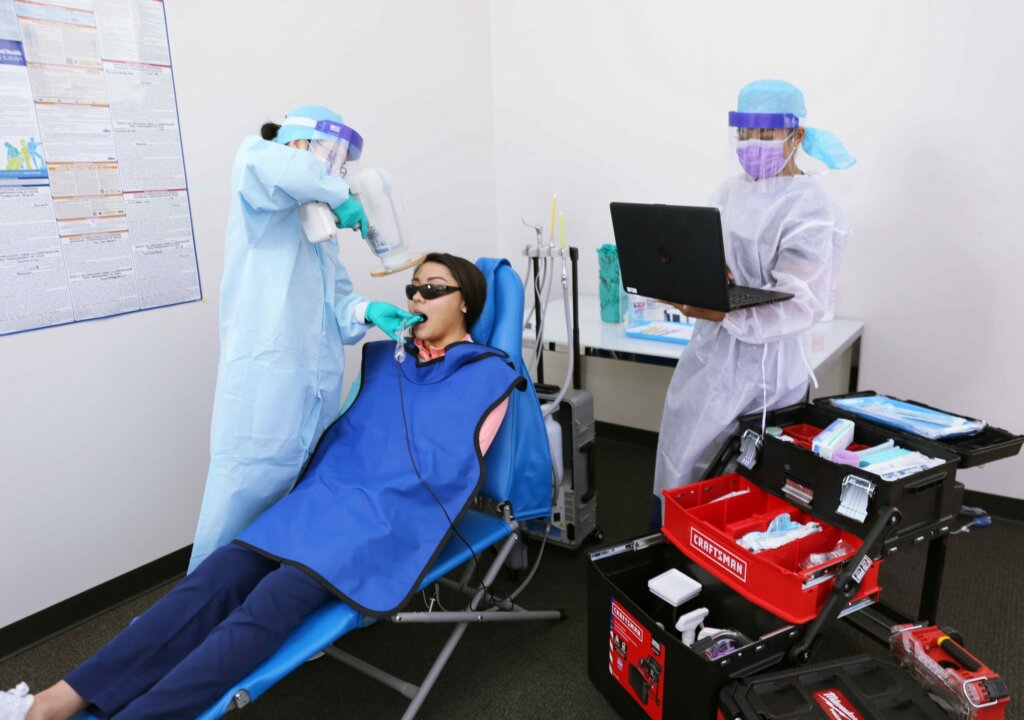
Enable Dental brings licensed, experienced dental professionals directly to your loved one — at home, in a care facility, or wherever they’re most comfortable.
Our team uses portable technology built for accurate, thorough care outside a traditional office:
- Handheld digital X-ray units for precise diagnosis on the spot
- Custom dental chairs and wheeled dental units for safe, comfortable treatment in any setting
- Calm, patient-centered care designed for individuals with dementia, mobility limitations, or communication challenges
No transportation. No unfamiliar waiting rooms. Just professional dental care delivered with dignity, wherever your loved one is.
Don’t Wait for the Pain to Get Worse
Trust what you’re seeing. If your instincts say something’s wrong, that’s reason enough to get a professional opinion. Dental pain in elderly or nonverbal loved ones rarely resolves on its own — and early treatment is almost always easier, safer, and less costly than waiting.
Contact Enable Dental to schedule an in-home or on-site evaluation:
(866) 988-4504 | [email protected]

Enable Dental announced the closing of its Series A financing in December, led by FCA Venture Partners, to scale its proprietary portable dental solution model. The uniquely developed solution leverages technological advancements in […]